
Contractor Landing Pages That Convert: The Anatomy of a Page That Books Jobs
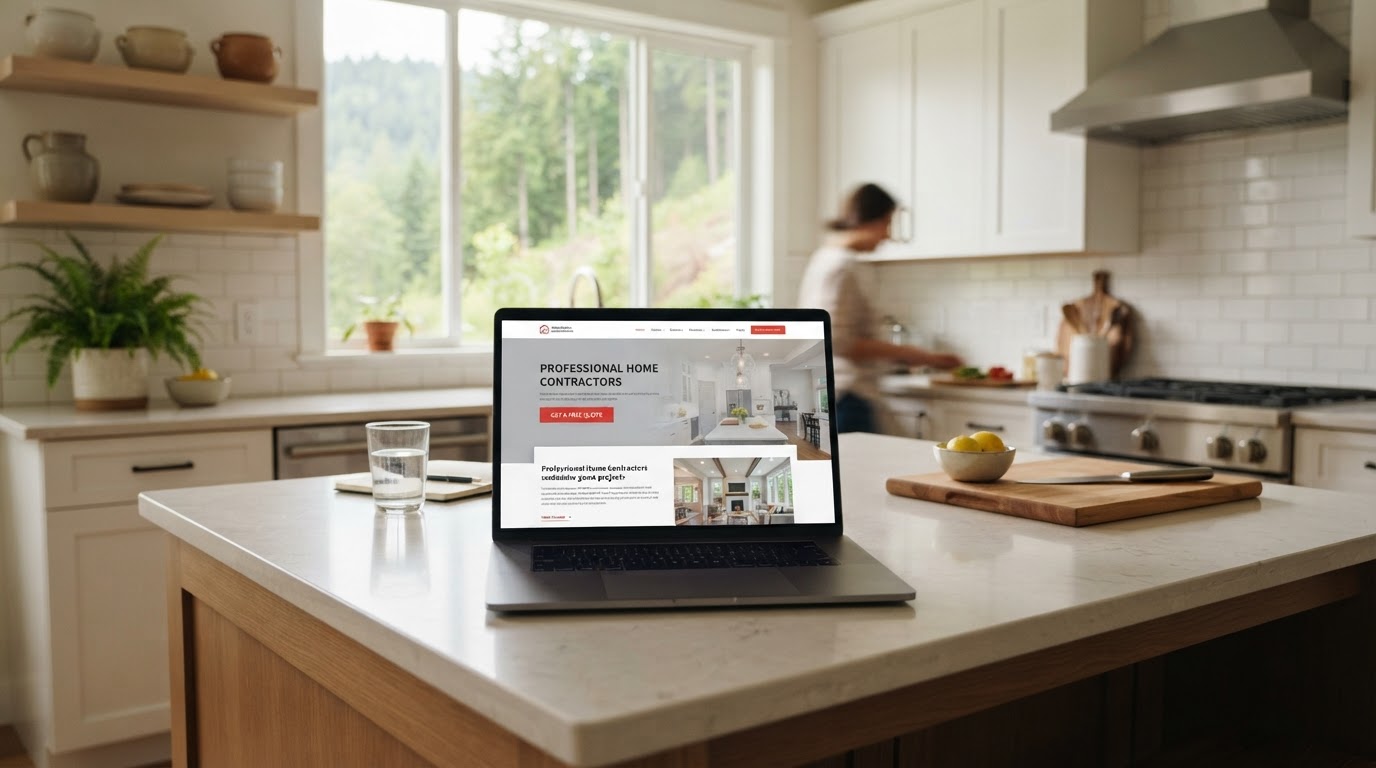
Your Ad Is Only as Good as the Page It Sends People To
You can run the perfect Google ad — the right keyword, the right audience, the right budget — and still get zero calls if you send that traffic to your homepage. A homepage is a brochure. It lists everything you do, talks to everyone, and asks for nothing specific. When a homeowner with a burst pipe lands on a homepage, they have to hunt for your phone number, figure out if you handle emergencies, and decide whether to call. Most of them do not. They bounce.
A landing page is different. It is built for one service, one audience, and one action. When a homeowner clicks an ad for emergency plumbing and lands on a page that says "Emergency Plumbing in Tacoma — We Answer 24/7" with a massive call button, they call. That is the difference between a page that converts and a page that bounces.
The Anatomy of a High-Converting Landing Page
A contractor landing page that actually books jobs has specific elements, in a specific order. Here is the anatomy:
1. A Headline That Matches the Ad
If your ad says "Emergency Furnace Repair in Seattle," your landing page headline should say the same thing. The moment a homeowner lands, they should see that they are in the right place. A mismatch between ad and page is the fastest way to lose trust and a lead.
2. A Click-to-Call Button Above the Fold
The phone number should be the most prominent element on the page — visible the moment the page loads, without scrolling. On mobile, it should be a sticky button that stays at the bottom of the screen. Homeowners in an emergency do not read your whole page; they look for a number and call.
3. Reassurance Messaging
A homeowner with a problem wants to know you can solve it — fast. A line like "We respond in 60 minutes or less" or "Available 24/7, including holidays" reassures them before they even read another word. This is especially critical for emergency services.
4. Social Proof
Reviews, before-and-after photos, and badges (licensed, insured, Google Guaranteed) build trust instantly. Embed your best Google reviews directly on the page. A homeowner who sees five 5-star reviews from neighbors in their city is far more likely to call than one who sees a generic "Testimonials" section with no names.
5. One Clear Call to Action
A landing page should have one goal: get the homeowner to call or book. Do not offer five different options — call, email, chat, download a guide, sign up for a newsletter. One button, one form, one action. Every element on the page should point toward that single action.
6. Fast Load Speed
If your page takes more than 3 seconds to load on a phone, over half of visitors leave. Heavy images, bloated code, and slow hosting are the usual culprits. A fast page is not just better for conversions — it is also a Google ranking factor.
One Page per Service, per Campaign
The biggest mistake contractors make is sending every ad to the same page. If you run ads for emergency plumbing, water heater installation, and drain cleaning, you need three separate landing pages — one for each. A homeowner who clicks an ad for water heater installation should land on a page about water heater installation, not a generic plumbing page.
This is where a website and funnel system pays for itself. Each campaign gets its own page, built for that specific service and audience. The conversion rate on a dedicated page is 3 to 5 times higher than a generic homepage.
Mobile-First, Always
Over 70% of contractor leads come from a phone. Your landing page is not a desktop page that happens to work on mobile — it is a mobile page that also works on desktop. That means:
- The call button is thumb-reachable and sticky.
- The form is short — name, phone, and what they need. Nothing else.
- The page loads in under 2 seconds on a cellular connection.
- The text is large enough to read without pinching to zoom.
Pairing Landing Pages with AI for Instant Response
Even the best landing page loses leads if no one responds when the form is submitted. When a homeowner fills out a form at 9 p.m., they expect a response — not a "we will get back to you during business hours" message. An AI receptionist and automated lead follow-up system ensures every form submission gets an instant text reply, keeping the homeowner engaged until your team can call back.
Conclusion
Your ad spend is only as effective as the page it sends traffic to. A dedicated, mobile-first landing page with a clear call to action, social proof, and fast load speed converts visitors into calls — while a generic homepage sends them bouncing to your competitor. Contact Craft Edge to build landing pages that turn your ad spend into booked jobs.
Comprehensive Industry Analysis for 2026
As we navigate through 2026, the home service industry is experiencing unprecedented shifts. The integration of artificial intelligence, machine learning, and advanced automation tools is no longer a luxury but a necessity. Companies that fail to adopt these technologies are finding themselves outpaced by competitors who can respond faster, quote more accurately, and follow up relentlessly.
Recent market research indicates that customer expectations have evolved dramatically. Homeowners now expect Amazon-like efficiency when dealing with contractors. They want instant communication, transparent pricing, and seamless scheduling. This shift in consumer behavior means that your operational efficiency is directly tied to your brand reputation and bottom line.
Furthermore, the cost of customer acquisition continues to rise across all traditional channels. Paid advertising platforms are becoming more saturated, making each click more expensive. This economic reality forces contractors to maximize the lifetime value of every lead, emphasizing the critical importance of robust CRM systems and automated follow-up sequences.
In this hyper-competitive landscape, data is your most valuable asset. Tracking every interaction, understanding conversion rates at each stage of the funnel, and leveraging predictive analytics can provide a significant edge. By understanding the macro trends shaping the industry, contractors can position themselves proactively rather than reacting to market pressures.
Step-by-Step Implementation Guide
Implementing these strategies requires a methodical approach. It is not about overhauling your entire business overnight, but rather making strategic, incremental improvements that compound over time.
Phase 1: Audit and Assess
Begin by mapping out your current customer journey. From the moment a prospect searches for your services to the final invoice, identify every touchpoint. Where are the bottlenecks? Are leads slipping through the cracks because of delayed responses? Are estimates taking too long to generate? A thorough audit will reveal the most critical areas needing immediate attention.
Phase 2: Establish the Foundation
Before deploying advanced automation, ensure your foundational systems are solid. This means having a centralized CRM where all customer data is stored. Clean up your existing database, standardize your data entry processes, and ensure your team is trained on the core software. A system is only as good as the data it holds.
Phase 3: Deploy Automation Incrementally
Start with the highest-impact automations first. For most contractors, this is speed-to-lead. Implement automated SMS responses for missed calls and web form submissions. Once this is running smoothly, move on to automating estimate follow-ups, and finally, post-job review requests and long-term nurture campaigns.
Phase 4: Monitor, Measure, and Optimize
Automation is not a set-it-and-forget-it solution. Regularly review your analytics. Are your automated texts getting responses? Are your email open rates healthy? Use A/B testing to refine your messaging and continuously optimize your workflows for better conversion rates.
Common Pitfalls and How to Avoid Them
While the benefits of modernization are clear, the path is often fraught with challenges. Understanding these common pitfalls can save you significant time and resources.
- Over-Automating Too Quickly: Trying to automate every single process at once usually leads to confusion and broken systems. Start small, validate the process, and scale up.
- Losing the Human Touch: Automation should handle the routine tasks, but human interaction is still crucial for building trust, especially in high-ticket sales. Ensure your automated messages sound natural and always provide an easy way for the customer to speak with a real person.
- Poor Data Hygiene: If your CRM is filled with duplicate contacts, outdated information, and incorrect formatting, your automations will fail. Establish strict protocols for data entry and regularly clean your database.
- Ignoring Team Buy-In: New systems will fail if your team refuses to use them. Involve your staff in the selection and implementation process. Show them how the new tools will make their jobs easier, not harder.
Advanced Strategies for Market Dominance
Once your foundational systems are in place, you can leverage advanced tactics to truly dominate your local market.
Predictive Maintenance Campaigns: Use your CRM data to predict when past customers will need service again. For example, if you installed a water heater 10 years ago, automate a campaign offering a replacement inspection. This proactive approach generates highly qualified leads with zero ad spend.
Hyper-Personalized Marketing: Move beyond generic newsletters. Segment your audience based on their past services, home age, and neighborhood. Send highly targeted offers that speak directly to their specific needs, significantly increasing conversion rates.
Integration of AI Voice Assistants: Beyond simple chatbots, modern AI voice assistants can handle complex inbound calls, qualify leads based on your specific criteria, and book appointments directly into your dispatch software, providing a seamless 24/7 customer experience.
Dynamic Pricing Models: Utilize software that adjusts your pricing based on current demand, seasonality, and your current capacity. This ensures you are maximizing profitability during peak seasons while remaining competitive during slower periods.
Frequently Asked Questions (Detailed)
Q: How long does it take to see a return on investment (ROI) from these systems?
A: While results vary, most contractors see a positive ROI within the first 30 to 60 days. The immediate capture of previously lost leads (like missed calls) often pays for the software in the first week. Long-term ROI compounds as your database grows and your automated nurture campaigns begin to convert older leads.
Q: Will automation make my business feel impersonal?
A: When done correctly, automation actually makes your business feel more responsive and attentive. Customers appreciate instant confirmations, timely reminders, and quick answers to their questions. The key is crafting your automated messages to sound authentic and conversational, rather than robotic.
Q: Do I need to be tech-savvy to implement this?
A: Not necessarily. While there is a learning curve, modern platforms are designed with user-friendly interfaces. Additionally, partnering with an agency or software provider that offers "Done-For-You" setup and ongoing support can eliminate the technical hurdles, allowing you to focus on running your business.
Q: How does this impact my current staff? Will it replace jobs?
A: Automation is designed to augment your staff, not replace them. By handling repetitive administrative tasks, your team can focus on higher-value activities like closing sales, providing exceptional customer service, and strategic planning. It often leads to higher job satisfaction as tedious tasks are eliminated.
Case Studies and Real-World Examples
Consider the case of a mid-sized roofing company that was struggling with lead leakage. They were spending $10,000 a month on ads but missing 30% of their inbound calls due to being on job sites. By implementing an AI voice receptionist and an automated missed-call text-back system, they immediately recaptured 15 leads in the first month, resulting in $45,000 in new revenue that would have otherwise gone to competitors. Their cost per acquisition dropped significantly, and their overall profitability soared.
Another example is a plumbing contractor who utilized database reactivation. They had a CRM with over 5,000 past customers but hadn't communicated with them in years. By sending a simple, automated text message offering a seasonal inspection, they generated 85 booked appointments in a single week, generating over $20,000 in immediate revenue with zero additional marketing spend.
The Future Outlook and Trends
Looking ahead, the convergence of AI, machine learning, and home services will only accelerate. We will see the rise of predictive analytics that can forecast equipment failures before they happen, allowing contractors to offer preemptive solutions. Augmented reality (AR) will become more prevalent in the quoting process, allowing for remote, highly accurate estimates.
Furthermore, the integration of smart home devices with contractor CRMs will create a new ecosystem of automated service requests. Contractors who build the digital infrastructure today will be the ones positioned to capitalize on these advanced technologies tomorrow.
Actionable Checklist for Contractors
- [ ] Audit your current missed call rate and response times.
- [ ] Consolidate all customer data into a single, cloud-based CRM.
- [ ] Implement an automated missed-call text-back system.
- [ ] Set up a 5-step automated email/SMS follow-up sequence for all new estimates.
- [ ] Automate your review request process immediately following job completion.
- [ ] Segment your past customer database and launch a reactivation campaign this quarter.
- [ ] Claim and fully optimize your Google Business Profile, adding new photos weekly.
- [ ] Train your team on the new systems and establish clear SOPs for data entry.
By treating your digital presence and operational systems with the same level of professionalism and care as your actual trade work, you will build a resilient, highly profitable business capable of dominating your market for years to come.
Ready to automate your follow-ups?
Stop losing jobs to missed calls and slow responses. See how our AI marketing systems can scale your home service business.
Claim Your Free AuditRelated Articles

How AI Marketing Automation Saves Contractors 10+ Hours a Week
Stop wasting time on manual follow-ups. Discover how AI receptionists and automated SMS can keep your pipeline full while you focus on the job site.
Local SEO Strategies for HVAC & Plumbing Companies in Puget Sound
Want to dominate the Google Map Pack in your local area? Learn the specific Local SEO strategies that get home service businesses ranking #1.

How to Stop Losing Roofing Leads to Competitors
Are your roofing leads slipping through the cracks? Discover the top reasons contractors lose deals and how to fix your sales pipeline.